How an old home was transformed by new insulation
Close your eyes and picture Vermont. What's the first thing you see? Rolling hills? Cows? Historic town centers?
Maybe you pictured an old farmhouse. There's one (or several) around every bend in the road. They're part of our state's character.
But anyone who has ever lived in a century-old home knows there can be tradeoffs for that old charm. Stone foundations and dirt basements are prone to moisture issues, and poor insulation can make homes drafty.

Chris Serkin and Kim Greenberg, of Marlboro, know those tradeoffs well. When returning to their early-1800s home after being away for a little while, they'd get hit with the stink of must and mildew. "I'd sneeze all the time," says Chris. "It didn't feel healthy."
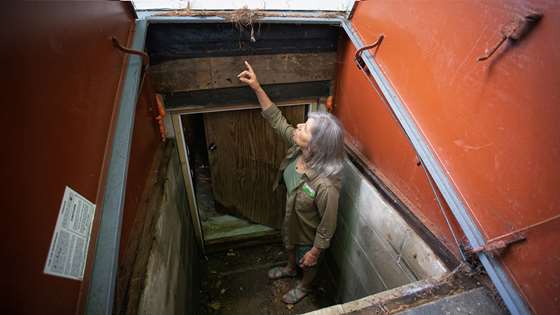
Decades of standing water in the dirt basement had turned some of the home's carrying beams soft and rotten. The Serkins ran a dehumidifier, but it wasn't enough to combat the moisture.
Find the Right Pros
 Heat Pumps
  Weatherization
 The couple called Farnum Insulators, a weatherization company based near Putney. Farnum is a member of the Efficiency Excellence Network (EEN), a network of contractors trained in areas like state-of-the-art building science.
The first step was a whole-home energy audit (also known as an energy assessment). Sonia Emeric, Farnum's energy auditor, says she likes going into an energy audit without any advanced knowledge about the home. This allows her to objectively assess the home's biggest energy challenges and opportunities for improvement.
Sonia estimates that at least half of the homes she sees are old and quirky, like the Serkins'. Many homes have been expanded over time, with sections from different eras. One of the primary complaints Sonia hears is that people are cold because the home is so drafty.
After the energy audit, the Serkins decided to weatherize the leakiest parts of their home: The basement and the attic. They utilized Efficiency Vermont's Home Performance with ENERGY STAR rebate.
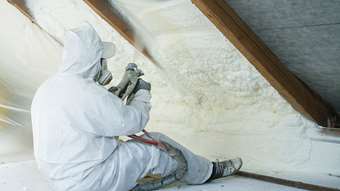
Farnum Insulators installed a vapor barrier on the basement floor and sprayed insulation along the inside perimeter of the stone foundation. "It's a tough job," Sonia says. "Our crews have to crawl around in a lot of basements." They also installed an insulated door to the bulkhead (the basement exit), which Sonia says is one of the most common projects she sees.
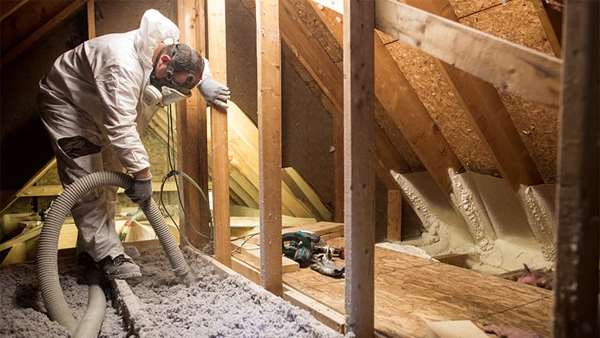
In the attic, there was already blown-in cellulose insulation. Farnum further insulated the attic hatch to reduce heat loss from the living space. This keeps the warm air where the Serkins want it—in their home —and not escaping out through the attic.

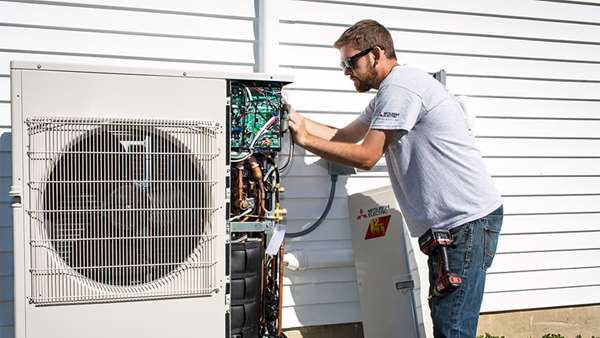
The homeowners immediately felt the benefits. "It feels so much better in the house," Chris says. "It's dryer, it doesn't smell, and it's less drafty." Not only is their home more comfortable, but the Serkins are saving on their monthly energy bills. They’ve incorporated energy efficiency into other parts of the home, too, like installing a ductless heat pump.
The Serkins hope these improvements will extend the lifespan of their historic home. "Getting the moisture out of the basement is going to help ensure that our house is here for another 100 years," Chris says.