When – and why – to upgrade your home’s electrical panel
An electrical panel upgrade may not be necessary to add energy-saving technologies to your home. We recommend consulting with a contractor to determine whether an electrical panel upgrade is right for your home. Here are a few times you may consider upgrading.
Vermont has some of the oldest housing stock in the country. This means many of the state’s homes are not built to handle today’s high electric loads. Homes from the 1950s and earlier may have 60-amp panels, which are designed to handle only a few appliances. If your home was built in or before the 1950s, you may need to update your electric panel to accommodate a greater number of appliances.
Homes built in the 1980s often have 100-amp panels, which are designed to power a refrigerator, dishwasher, stove, and other common appliances. These panels provide enough power for most family needs, but they may not be ready to support a wider range of electric equipment like heat pump water heaters and electric vehicle chargers. According to Rewiring America, if you have a 100-amp panel you can usually switch from gas to electric appliances without a panel upgrade—it just takes some extra planning.
Before you begin any electrification project, you should have your panel inspected to ensure it can support a new load. You may find that you need to upgrade to a 200-amp panel.
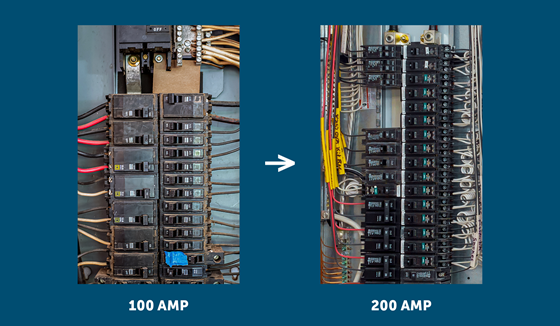
Whether you’re getting an electric stove or exploring a heat pump heating and cooling system, it’s a great time to consider upgrading your home’s panel. Any sort of renovation that adds to your electric load may cause a system overload if your panel can’t support these changes.
Upgrading to a 200-amp panel greatly increases a home’s electric capacity, which allows for any modern appliances and electrification updates you may have in mind. You may consider this upgrade if you’re planning to do any of the following updates:
- Installing air conditioners, mini-splits, or other heat pump heating and cooling options
- Replacing a stove with an induction model
- Installing an electric vehicle charger
- Adding conditioned living space (like finished basements or garages)
- Getting a hot tub
- Switching to a heat pump water heater
- Getting a heat pump clothes dryer
- Installing solar panels
By upgrading your panel, you can be sure that your electrical system can manage the increased load.
Even if you’re not planning a major renovation, upgrading to a 200-amp panel may be a good idea. This high-power panel can meet modern electricity demands with reliable, stable power. If your home is prone to power outages or tripped breakers, a new panel can help improve your electric service.
Find the Right Pros
 Electricians
 Upgrading your home’s electric panel may feel like a hassle, but it unlocks so many potential benefits. Here are a few of our favorites.

A panel upgrade can allow you to install more efficient, electric equipment that costs less to run than gas or oil counterparts. Who doesn’t want to see lower energy bills? This energy-saving equipment includes heat pump water heaters, heat pumps for space heating and cooling, induction stoves, etc.

You can get your space ready to support all-electric appliances like induction cooktops, clothes dryers, and electric vehicle chargers. Your future self will thank you.

Vermont has one of the cleanest electric grids in the nation, so when you upgrade your electric system and complete electrification projects, you can significantly reduce your carbon footprint. Plus, moving away from fossil fuels can help improve air quality in your community.
The dreaded question on homeowners’ minds at the start of any home project is: “How much is this going to cost?”
The answer depends on several factors, including:
- Electrician rates in your community: We recommend hiring a professional to complete this work, so any cost estimate needs to include their labor rates.
- Panel size: Electric panels range from 60–400 amps. In general, panels with higher amps cost more.
- Whether you’re installing new or upgrading: It’s typically more expensive to install an entirely new system than it is to upgrade your existing panel.
- Other services: You may incur added costs if your panel needs to be relocated or if the meter box needs to be replaced.
Though there is variation, the cost of upgrading an electric panel from 100 amps to 200 amps averages around $7,000.